
How often should you get Sofwave? How long results last and when to repeat
There is no fixed number of months between Sofwave sessions. The manufacturer says results from a single session can last a year or more, and the studies published so far followed patients for three to eight months after treatment (results vary by person). So rather than setting the next session by the calendar, the approach that matches the evidence is to look again at photos taken under the same conditions before and after treatment, and at your skin as it is now.
Written November 23, 2026 · The figures in this article come from the manufacturer's information, US FDA 510(k) documents and journal papers. Sources are listed at the end.
When do Sofwave results appear, and how long do they last?
The manufacturer explains that some people notice early changes within a week, and that results then appear gradually over 12 weeks as new collagen and elastin form. It states that results from one session can last a year or more, adding that this depends on age, genetics, lifestyle and skincare.
Here is what the sources report, organized by time point.
| Time point | What the sources report | Source |
|---|---|---|
| Within 1 week | Some people notice early changes | Manufacturer |
| About 1 month | In a 36-person study, more than 60% had less hollowing in the nasolabial and marionette areas | Hongcharu 2023 |
| 3 months (12 weeks) | The period when regeneration progresses gradually; in the study above, further change between 1 and 3 months was not statistically clear | Manufacturer, Hongcharu 2023 |
| 6 months | In a 15-person study with two sessions, improvement was maintained at both 3 and 6 months | Gold 2024 |
| Up to 8 months | The longest follow-up point, in a 14-person acne scar study | Boonchoo 2025 |
| A year or more | How long the manufacturer says results from one session can last | Manufacturer |
Key point · Changes appear over one week to three months and, according to the manufacturer, can last a year or more, but most study follow-up covers three to eight months.
So how is the Sofwave retreatment interval decided?
Neither the manufacturer nor the US FDA clearance documents set a schedule of "repeat every so many months." The manufacturer says most people see change from a single session. Instead of a fixed number of months, we look at three things to decide the next time point.
- How much of the first change remains — we compare photos taken under the same lighting and from the same angle as before treatment. This is fairer than the mirror you look at every day.
- Which layer the sagging is progressing in — whether the issue is dermal elasticity or a deeper layer descending can change which device comes next.
- Whether you have had other treatments in between — your history of lifting, filler or thread treatments is essential for setting the interval.
Key point · There is no fixed retreatment interval; reviewing photos and your skin around one year matches the manufacturer's guidance.
Does getting Sofwave more often work better?
The manufacturer information and studies we checked looked at the course after one session, or after two sessions four to six weeks apart. Within those sources we found no evidence that repeating at short intervals produces larger results.
Sofwave relies on the skin rebuilding collagen on its own after a heat stimulus. Rather than repeating before that process has even finished, it fits the evidence better to judge after the change has settled.
Key point · There is no confirmed evidence that more frequent sessions work better; decide after regeneration is over.
Is the interval different compared with Ultherapy and Thermage?
The three devices reach different layers with different types of energy, so the duration the manufacturers describe also differs slightly. It is more accurate to think of them as covering different layers than to ask which one is better.
| Device | Energy type | Main layer reached | Duration stated by the manufacturer | US FDA 510(k) cleared uses (summary) |
|---|---|---|---|---|
| Sofwave | Parallel-beam ultrasound (not focused to a single point) | Mid-dermis, about 1.5mm | A year or more after one session | Facial wrinkles, eyebrow lift, submental and neck lift (age 22 and over) |
| Ultherapy | Focused ultrasound (HIFU) | 1.5, 3.0 and 4.5mm, down to the SMAS (fascia) layer | A year or more after one session | Eyebrow lift, submental and neck lift, upper chest (décolleté) lines |
| Thermage FLX | Monopolar radiofrequency | Heats the whole dermis | Appears over 2–6 months, can last 1–2 years | Periorbital wrinkles (including upper and lower eyelids), wrinkles |
The manufacturer explains that Sofwave is designed to target the dermis, shallower than the roughly 3mm depth where the fat layer begins. If sagging in deeper layers is your main concern, read How often should you get Ultherapy?; if overall dermal firmness is the concern, read How often should you get Thermage? for an easy comparison.
Key point · According to the manufacturers, Sofwave and Ultherapy last a year or more and Thermage FLX one to two years; the three devices reach different layers.
If combined with another lifting treatment, how far apart should they be?
Even when both layers are a problem and treatments are combined, at LUNN Dermatology Clinic we usually leave a few weeks between them and check the response to the first treatment before moving on, rather than doing everything at once. When only one layer is the problem, a single treatment is often enough.
If you have had another lifting, filler or thread treatment in the past six months, please tell us at your consultation. We adjust the interval with each treatment's recovery period in mind. The order of combined treatments is covered in more detail in Ultherapy with Thermage: do the effects overlap?.
Key point · When combining, leave a few weeks and check the response to the first treatment; let us know about any treatment in the past six months.
How does LUNN decide when the next session should be?
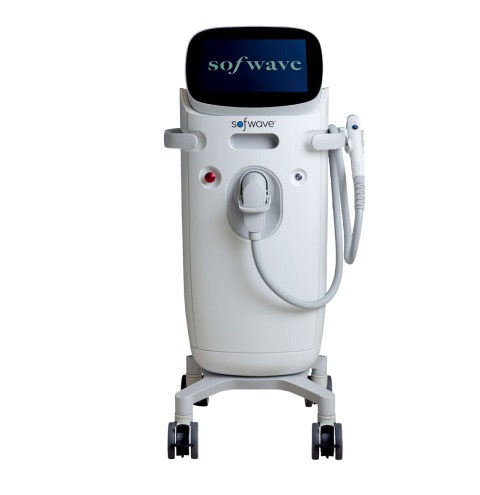
LUNN Dermatology Clinic has Ultherapy, Thermage FLX, Sofwave and ONDA, so consultations do not start from a device chosen in advance. A board-certified dermatologist checks skin thickness, where and how much the skin is sagging, and your past treatments, then explains with reasons whether to repeat Sofwave, whether a device that works on a different layer fits better, or whether it is fine to wait.
Device information is on the Sofwave in Cheongdam page, how it works and the research are in Sofwave: how it works, results and how long they last, and when it does and does not fit is in Sofwave: 4 situations when a doctor may advise against it.
Key point · We do not decide the device in advance; the consultation checks the layer and your history before deciding whether and when to repeat.
Other frequently asked questions
How many months apart should Sofwave sessions be?
There is no set number of months. The manufacturer says results from one session can last a year or more, so reviewing your photos and skin around that time before deciding matches the evidence. Results vary by person.
Will I see a change after just one session?
The manufacturer says most people see change from a single session, and in a 36-person study more than 60% had less hollowing in the nasolabial and marionette areas from about one month after one session. The degree of change differs between people.
When do results start to show?
The manufacturer explains that some people notice early changes within a week and that results appear gradually over 12 weeks. Comparing photos after two to three months is more accurate.
How long does the treatment take?
According to the manufacturer, usually 30 to 45 minutes. It depends on the area and how much is treated.
Does it hurt?
Pain scores reported in studies varied, averaging 3.94 to 6.64 out of 10. Cooling is used during treatment; if you are sensitive to pain, please tell us at your consultation.
Can I return to daily life right after treatment?
Makeup is fine on the day of treatment, but avoid scrubs and peels. We recommend avoiding saunas, hot rooms, swimming and strenuous exercise for at least one week, and alcohol and smoking for at least two weeks. Details are in Aftercare for lifting lasers.
Will it reduce facial fat and make my cheeks look hollow?
The manufacturer explains that Sofwave is designed to target the dermis, shallower than the roughly 3mm depth where the fat layer begins. Hollow cheeks can also come from other causes such as age or weight change, so if you are concerned we check this together at your consultation.
Where do the numbers in this article come from?
All figures in this article come from the sources below, which we opened and checked on November 23, 2026.
- Sofwave patient FAQ (manufacturer) — early change within 1 week, change over 12 weeks, a year or more, 30–45 minutes, usually one session, two sessions 4–6 weeks apart in the acne scar study
- Sofwave FAQ for clinicians (manufacturer) — targets the dermis, shallower than the fat layer at about 3mm
- US FDA 510(k) K240687 SofWave System — cleared uses (facial wrinkles, eyebrow, submental and neck, age 22 and over)
- Hongcharu W et al. J Cosmet Dermatol 2023;22(5):1488-1494 (PMID 36757157) — 36 people, follow-up at 1 and 3 months, more than 60% from 1 month, average pain 6.64
- Gold MH, Biron J. J Cosmet Dermatol 2024;23(1):117-123 (PMID 38031530) — 15 people, two sessions, follow-up at 3 and 6 months, average pain 5.6
- Boonchoo K, Hongcharu W. J Cosmet Dermatol 2025;24(4):e70134 (PMID 40132902) — 14 people with acne scars, follow-up up to 8 months, average pain 3.94
- Ultherapy and Thermage FLX figures in the comparison table: Ultherapy FAQ (manufacturer Merz, based on Ultherapy PRIME), US FDA 510(k) K180623 Ulthera System, Thermage FLX official information (manufacturer Solta Medical), US FDA 510(k) K170758 Thermage FLX System
- Device depth and aftercare: LUNN Dermatology Clinic's Sofwave in Cheongdam and Aftercare for lifting lasers pages
Key point · We used only figures we opened and checked directly in the manufacturer's information, US FDA documents and six journal papers.
Where is LUNN Dermatology Clinic?
LUNN Dermatology Clinic is at 5F, 822 Seolleung-ro, Gangnam-gu, Seoul, about 137m from Exit 4 of Apgujeong Rodeo Station. Hours and directions are on the Location page, and you can call +82-2-512-7788 for appointments.
Key point · About 137m from Exit 4 of Apgujeong Rodeo Station, at 5F, 822 Seolleung-ro.
Temporary redness, swelling and pain may occur after treatment, and rarely bruising, pigment changes or burns can occur (side-effect notice under Article 56 of Korea's Medical Service Act). Results and how long they last vary with skin condition, age and lifestyle. This article is general medical information; whether and when to have a treatment is decided after a consultation.
The same question, by device: Sofwave interval · Ultherapy interval · Thermage interval Related treatments: Sofwave in Cheongdam · Lifting and tightening lasers


