
No change after ten pico-toning sessions? A doctor explains possible reasons
“I’ve had more than ten toning sessions, but I can’t see much difference.” “They said it was the same PicoWay device. Why are the results different?”
I hear these two questions very often in pigmentation consultations.
To be candid, melasma is not pigmentation that improves dramatically in a short time. Stronger treatment can actually make it darker. There is a point where simply adding sessions does not solve the problem.
The longer a person’s toning history, the less I rush into a new session. Records on receipts can be valuable diagnostic material, so I start by asking what treatments they received and how many.

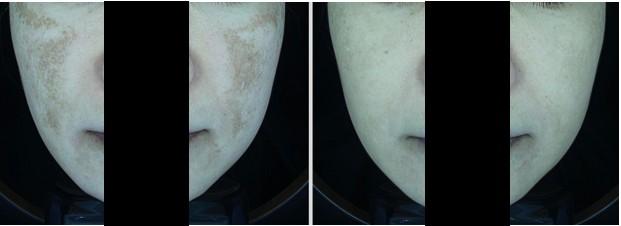
- These unretouched before-and-after photographs were taken with the patient’s consent under the same conditions and in the same environment.
- Results of all skin procedures vary individually. Depending on skin condition, side effects such as redness, pigmentation, inflammation, or burns may occur.
- Filler procedures may cause allergic reactions, muscle paralysis, necrosis, or blindness.
Are melasma and dark spots the same?
Some ask, “Are melasma and dark spots different?” The answer is that they are distinct forms of pigmentation with different depths and behavior. Although grouped as facial pigmentation, melasma, other dark spots, lentigines, and post-inflammatory hyperpigmentation respond differently to stimulation. Melasma in particular is sensitive pigmentation spanning the epidermal-dermal junction, and stronger treatment may make it darker. Most faces also have several types together: melasma over the cheekbones, spots on the cheeks, and acne marks on the chin. Diagnosis—what the pigment is and its current condition—therefore comes before the device name. Different diagnoses mean different goals. Some spots may clear in relatively few sessions, while melasma is closer to a condition managed toward gradual lightening without aggravation. Expecting the same pace without understanding this difference can make even progressing treatment feel stalled.
Why do results differ with the same PicoWay?
PicoWay essentially becomes a different treatment depending on the combination of wavelength, mode, and energy. Wavelengths for deep pigment differ from those for superficial spots, and targeted spot modes differ from broad, low-energy toning. Even with the same treatment name, different combinations mean different stimulation for the skin. If the skin is sensitive today, energy may need to be lowered. The issue is how this combination is chosen. One method repeats a preset standard setting each session; another checks the skin each time and redesigns the combination. I call the first “assembly-line toning.” This describes a method, not a particular clinic. Standard settings certainly suit some skin. But when pigmentation is mixed or melasma is present, repeating the same settings can lead to a plateau or worsening. This is often when people say, “It seemed to improve each time, but then it stopped.” The superficial pigment that responded well has cleared first, leaving pigment that needs a different plan.

What is reassessed at each Triple Toning session?
LUNN’s Triple Toning combines three wavelengths and modes according to pigment type and depth, revisiting that combination each session. We check the previous response, distinguish areas that darkened from those that lightened, and adjust today’s plan. Sessions usually continue at 2–4-week intervals, with the total number depending on pigmentation. If needed, a skin booster is added between toning sessions to care for the skin barrier. I consider planning to include creating a skin condition in which pigment can clear, rather than only targeting the pigment. I answer “How many sessions until it improves?” honestly: improvement can be expected with repeated sessions, but the speed differs by skin and cannot be fixed in advance. What I can explain is the evidence behind today’s design at every visit. Sun protection, moisturization, and other daily care during treatment also affect results, so I include care outside the procedure in one plan.
Who makes this judgment?
Choosing wavelengths and energy is ultimately a person’s job, not the machine’s. At LUNN, I examine the skin myself and personally perform every session. I believe continuity requires the same eyes to compare the previous visit with today. Care takes place in a private room, and multilingual assistance is available for international patients. Many people who find us through searches for clinics around Apgujeong Rodeo have already undergone toning at several places. Their treatment history is valuable diagnostic information, so bringing whatever they remember helps. Knowing the devices, number of sessions, intervals, and when progress stalled makes today’s planning much more accurate. We are a 1-minute walk from Exit 4 of Apgujeong Rodeo Station; you may call with questions before visiting. I also explain beforehand that pigmentation treatment varies greatly by individual and may cause temporary redness or, rarely, pigment changes, so monitoring must accompany treatment.
If you feel stuck after a long course of toning, I recommend a fresh diagnosis before adding sessions. It need not be at LUNN. Choose a place that explains what determined today’s settings.
Related column: Melasma laser: does stronger mean better? When pigmentation gets darker instead Related treatment information: Pigmentation and redness


