
Ice packs for Ultherapy pain? Why a doctor may not recommend them immediately
"My skin feels sore and tingly after treatment. Can I use an ice pack?" "The swelling isn't going down."
These are the questions we hear most often on the evening after Ultherapy or Thermage.
First, let me acknowledge something: Ultherapy hurts. It can be painful even compared with other procedures. It is therefore understandable to reach for something cold.
However, I do not immediately recommend an ice pack right after treatment. Because heat has just been used to stimulate regeneration, when and how the skin is cooled can affect the result.

Heat is the aim of lifting treatment, not merely a side effect
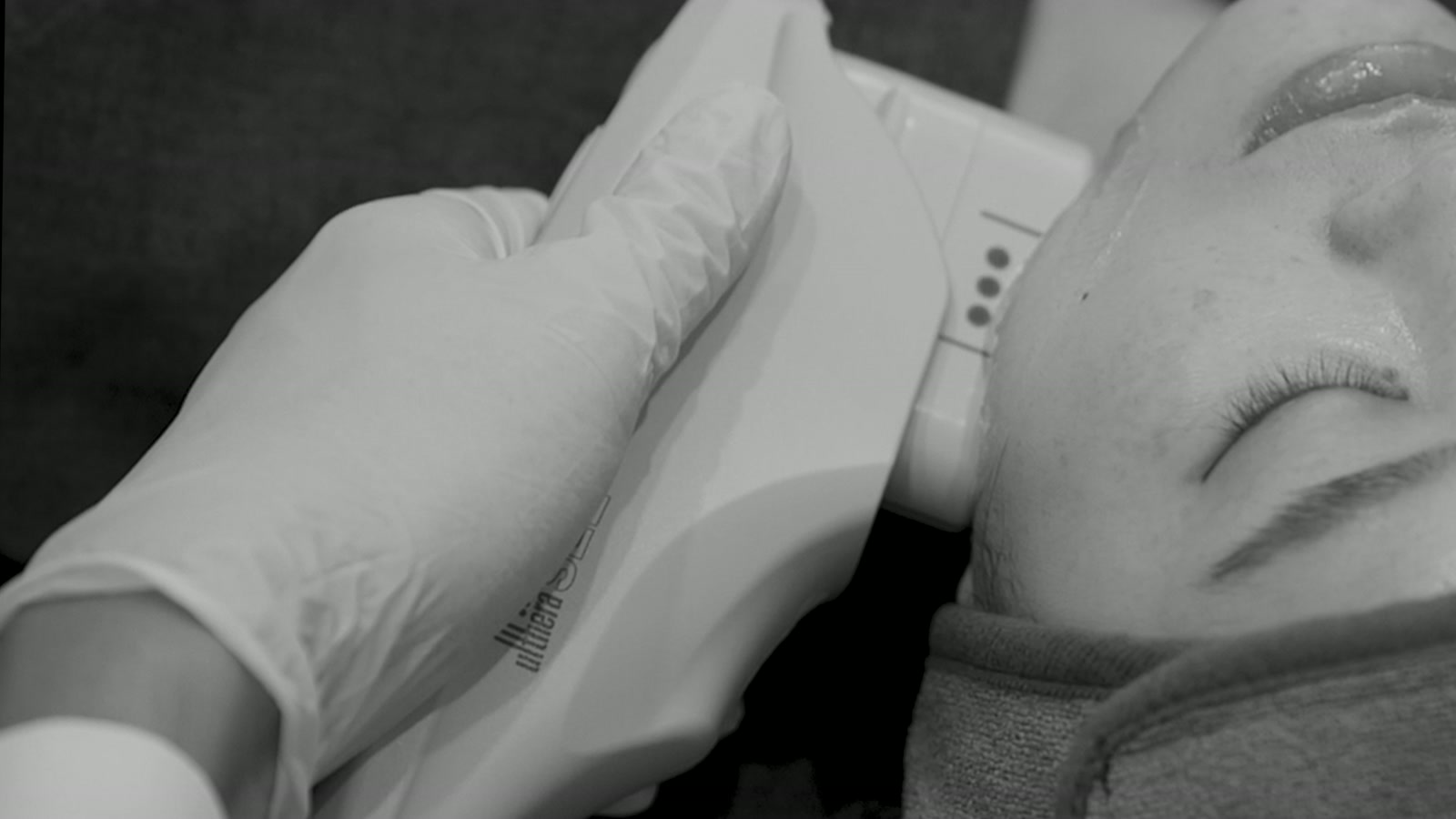
Some ask, "Isn't lingering warmth a sign that something went wrong?" In most cases, the answer is the opposite. Ultherapy delivers high-intensity focused ultrasound (HIFU), while Thermage FLX delivers radiofrequency (RF) energy into deeper skin layers. Their shared element is heat. Ultherapy concentrates heat in points down to a maximum depth of 4.5 mm, where the superficial musculoaponeurotic system (SMAS) lies; Thermage delivers heat more broadly across the dermis. Heat energy at the target depth gives collagen tissue a controlled microscopic stimulus, and the body produces new collagen while repairing it. This is called collagen remodeling. It explains why lifting effects do not appear all at once immediately after treatment, but develop gradually over the following 2–3 months. Mild warmth on the treatment day can also signal the beginning of this process. Metaphorically, lifting leaves a small construction site deep in the skin. Protecting that site so the work can proceed is also part of treatment.
Does that mean ice packs are always prohibited?
You may then ask, "Does that mean cold packs are absolutely forbidden?" This is the most important point in this article. The answer is neither an unconditional ban nor unconditional permission. When a procedure works through heat, routinely repeating intense cooling immediately afterward without guidance deserves reconsideration. I do not advise patients to reach for an ice pack on their own. But please do not misunderstand: this does not mean cooling is always bad. Depending on the procedure, energy settings, and skin response, temporary soothing to ease redness or pain can certainly be necessary. For some laser procedures, immediate soothing care is standard. The answer changes with the procedure and intensity used and the skin's current condition. Guidance from the treating doctor should therefore take precedence over a uniform answer found online. Even treatments received at the same clinic on the same day may require opposite aftercare approaches depending on their type. The same underlying principle applies to other heat-based lifting treatments such as Sofwave and ONDA.
What else should you check besides cooling?
Activities that add heat are actually a more frequent aftercare issue than cooling. Patients are often advised to avoid activities that dilate blood vessels—hot saunas, heated bathhouse rooms, alcohol, and strenuous exercise—for several days immediately after treatment. I generally use about 1 week as a reference, but this also varies with the procedure and individual condition. Another frequent question is, "Can I wash my face?" With procedures such as Ultherapy and Thermage that do not wound the skin surface, gentle cleansing on the same day is possible in most cases. However, it is safer to postpone rubbing with an exfoliating cloth or using peeling products for several days. Sun protection also matters. It is fundamental whether or not you have treatment, but immediately treated skin can be more sensitive than usual. In essence, aftercare is not about isolated rules such as cold or hot; it is about following someone who understands the recovery currently taking place in your skin.
The treating doctor gives the instructions personally
For people considering lifting treatments in Apgujeong, there is something I recommend checking before device names: who can you ask if questions arise after treatment? At LUNN Clinic in Cheongdam, I personally conduct consultation, treatment, and aftercare. The clinician who performed the procedure checks the skin immediately afterward and gives care instructions tailored to that day's energy settings and response. I assess on the spot whether cooling is needed or whether leaving the area alone is preferable. Questions arising later are also addressed individually. Of course, results and recovery speed vary, and temporary redness, swelling, warmth, or altered sensation may occur after treatment. That makes it all the more important to follow instructions tailored to your condition rather than general assumptions.

For accurate lifting aftercare, ask the clinic that treated you rather than deciding through a search. Different devices and intensities call for different precautions. If you were treated at LUNN Clinic, you are welcome to contact me directly.
Related article: Laser aftercare: When can I wash my face? Related treatment information: Aftercare following lifting


